Demand Generation Agency for Franchise Growth
Gartner reports that only 46% of marketing-qualified leads become sales-accepted leads, while 3% convert to new business on average, a warning against evaluating a demand generation agency by calendar activity alone (Gartner's demand generation and sales enablement research). For established U.S. franchisors, the better unit of value is verified candidate readiness, followed through to signed agreements, not a meeting that sales must qualify from scratch.
Table of Contents
- What a Demand Generation Agency Should Produce for a 50-Plus-Unit Franchisor
- The Franchise-Specific Capability Checklist
- Channel Economics Portals Brokers Paid Ads and Outbound
- RFP Questions That Expose Agency Strength and Weakness
- KPIs That Actually Map to Signed Franchise Agreements
- Why the Best Agency May Deliver Fewer and Better Leads
- Integrating Agency Output With Franchise Development Goals
What a Demand Generation Agency Should Produce for a 50-Plus-Unit Franchisor
The International Franchise Association's 2025 outlook projected 851,000 franchised establishments, up 2.5%, and $936.4 billion in output, up 4.4% from $896.9 billion in 2024; it also projected $578 billion in franchise GDP and 2.4% employment growth, adding approximately 210,000 jobs (IFA's economic outlook). Franchise development belongs in that operating context, not in a generic conversation about collecting inexpensive inquiries.
For a franchisor with an established footprint, the agency assignment should begin with territory priorities, candidate requirements, and sales capacity. A booked discovery conversation should arrive with evidence that the candidate matches the brand's investment requirements, operating expectations, and available geography.
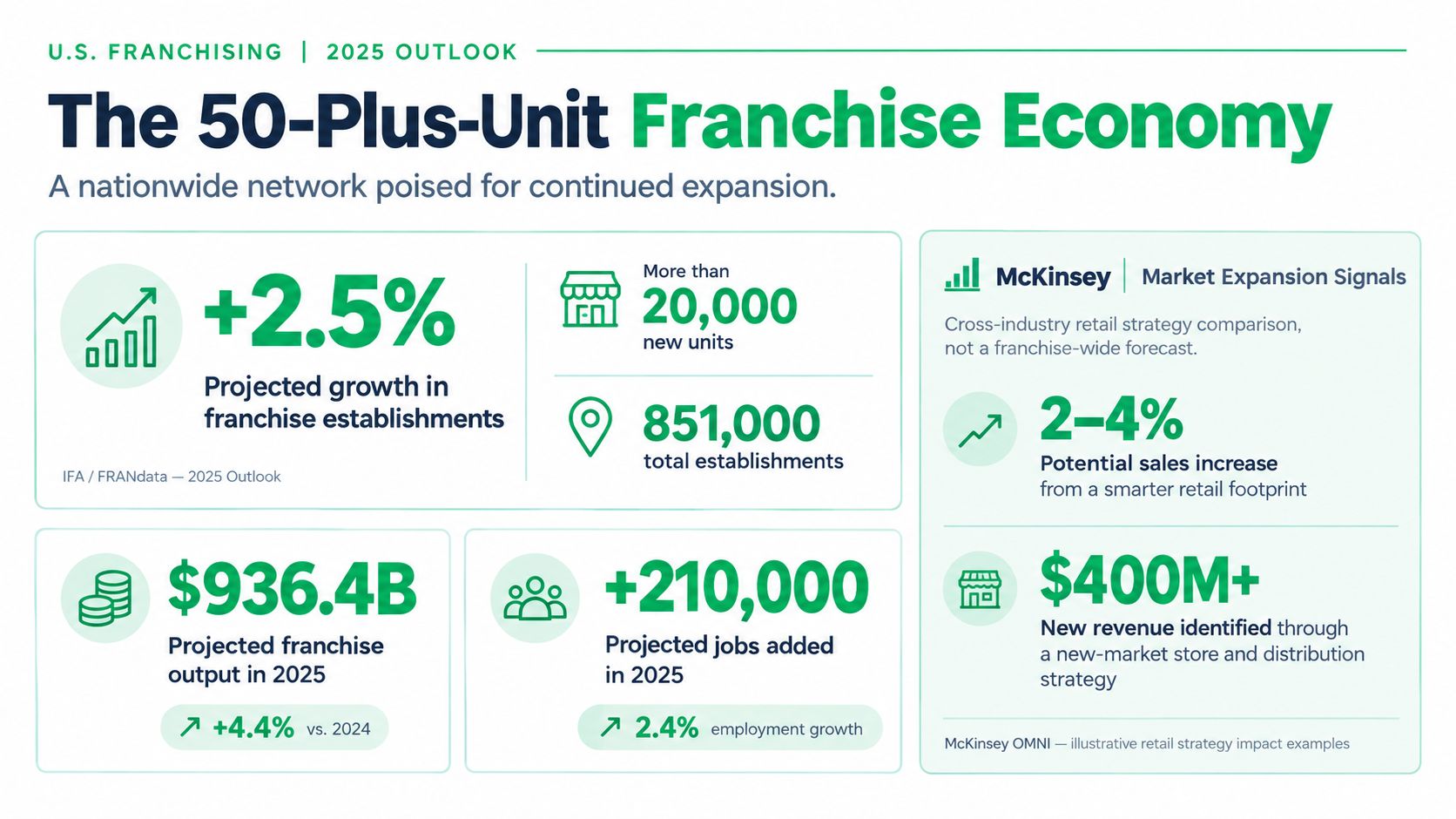
McKinsey's Channel Findings Support Coordinated Engagement
By April 2020, eight in ten B2B decision-makers considered omnichannel engagement at least as effective as traditional methods, according to McKinsey's global B2B research. The practical implication for franchisors is coordination: outreach, educational content, response handling, and discovery conversations should support the same candidate journey.
An agency selling email execution without qualification isn't delivering the whole system. Neither is an advertising partner whose responsibility ends at the form submission.
For development executives establishing a shared vocabulary with marketing, EmailScout on building demand offers a useful companion resource. The franchise-specific evaluation must go further, testing whether the agency can distinguish interest from a candidate who can progress.
Procurement rule: A calendar invitation is an operational event, not proof of franchise development value.
The working definition should therefore be explicit. A demand generation agency for franchise development is an outsourced system combining audience segmentation, outbound or paid distribution, content, response handling, qualification informed by the FDD, and service-level reporting.
The franchisor should judge that system by downstream signed agreements and the quality of opportunities sales accepts. Raw MQL volume belongs in the diagnostic report, not at the center of the commercial promise.
The Franchise-Specific Capability Checklist
The 2025 American Franchise Development Report found that 70% of franchisors manage recruitment advertising internally, while 53% use targeted, custom direct marketing programs (Franchising.com's recruitment analysis). Those figures describe channel adoption, not proof that a brand has a reliable candidate-readiness process.
Vendor evaluation should require operating artifacts rather than verbal assurances. The useful evidence includes a qualification form, a rejected-candidate example, an approved messaging library, and an actual handoff record with sensitive information removed.
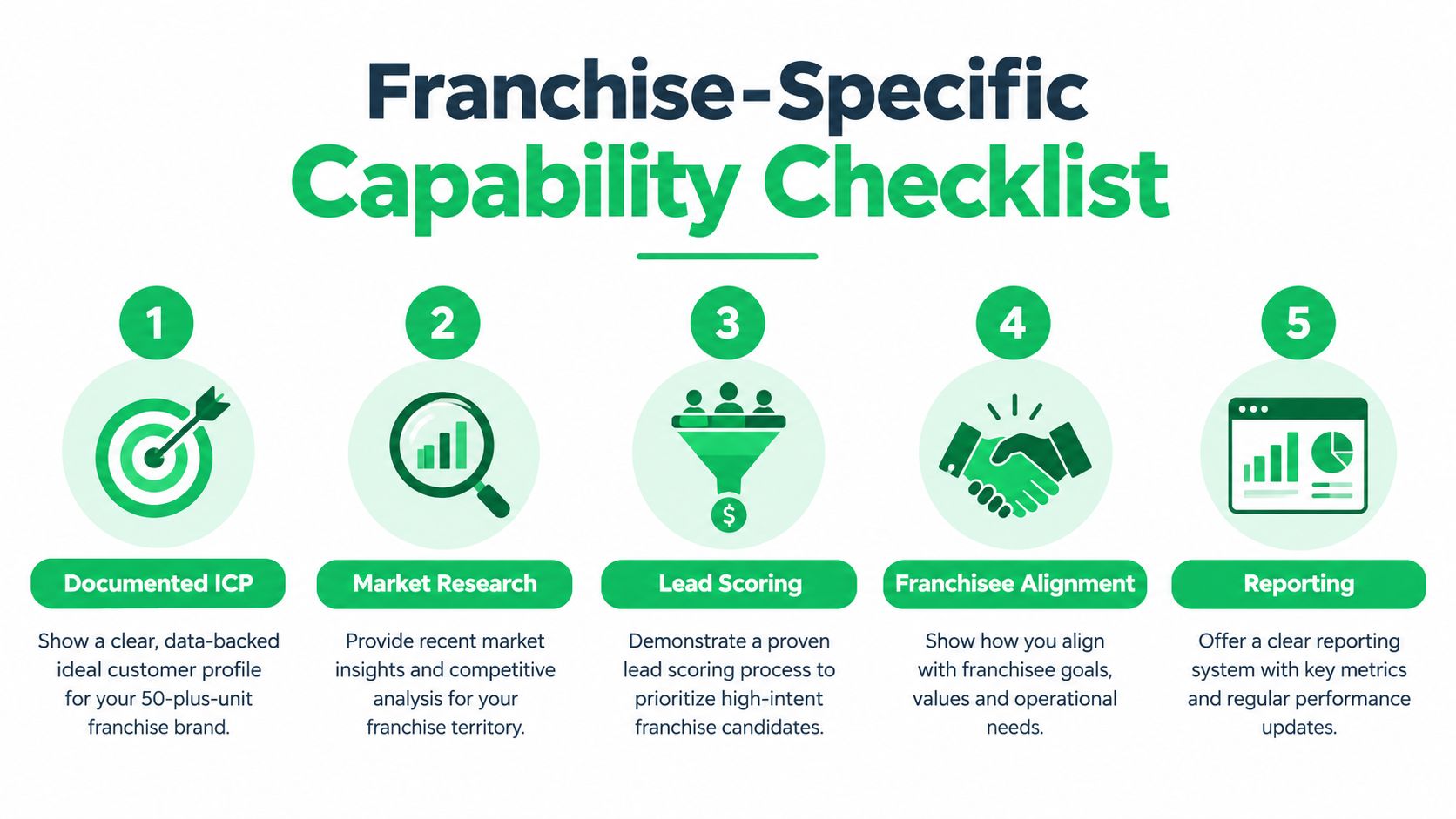
Qualification Evidence Before Calendar Access
The agency should document the ideal franchisee profile, explicit disqualifiers, and the evidence required to resolve uncertain cases. A senior title shouldn't substitute for financial capacity, and operating experience shouldn't substitute for available territory.
| Capability | Evidence required in the vendor meeting | Franchise development purpose |
|---|---|---|
| Documented targeting | Approved profile, exclusions, territory rules | Prevent unsuitable introductions |
| First-party qualification | Income, liquidity, capital, authority, experience, timing | Separate stated interest from readiness |
| Financial verification | Documented method, verification status, reviewer | Establish whether financial requirements are met |
| Messaging governance | Approved claims and escalation process | Keep outreach aligned with disclosure |
| Sales handoff | Qualification notes, agreed next step, CRM fields | Give sales a usable discovery starting point |
Financial verification should distinguish self-reported information, reviewed evidence, and outstanding checks. The agency should explain who can access sensitive information, what the franchisor receives, and when verification must be refreshed.
FDD Fluency and Named Qualification Staff
FTC guidance identifies Item 7 as estimated initial investment, Item 19 as financial performance representations, Item 20 as outlet and turnover information, and Item 21 as audited financial statements; financial-performance claims require the appropriate Item 19 basis (FTC franchise disclosure guidance). The agency's scripts should preserve those distinctions instead of blending startup costs with earnings expectations.
The staffing recommendation is straightforward: require named, U.S.-based qualification specialists with demonstrable franchise development experience. QSR, home services, real estate brokerages, fitness and wellness, automotive services, and senior care each deserve concept-specific screening rather than a generic appointment-setting script.
The reporting agreement should cover median response time, acceptance rate, meeting-held rate, opportunity rate, and revenue per accepted lead. An agency that can't show a documented financial-verification step is selling leads, not demand.
Channel Economics Portals Brokers Paid Ads and Outbound
Surveyed brands planned approximately $1.02 million in average recruitment budgets for 2025, compared with $734,564 in 2024, with digital marketing accounting for 41%; 29% used advertising agencies and 16% used third parties (AFDR findings summarized by FranNet). The same summary identified digital and social messaging as the most popular recruitment approaches.
Those budgets deserve a consistent denominator. Comparing a portal's inquiry price with an outbound agency's fully qualified appointment price doesn't establish which channel is more efficient.
Franchise Recruitment Channel Economics
| Channel | Typical Top-of-Funnel Source | Cost per Verified Candidate | Time to Qualified Discovery Call | Fit with 50+ Unit Brands |
|---|---|---|---|---|
| Franchise portals | Submitted inquiries | Allocate fees and screening labor across verified candidates | Measure from inquiry through completed qualification | Test against exclusivity, readiness, and territory fit |
| Broker referrals | Intermediary introductions | Include applicable referral fees and internal review | Measure from referral receipt, not calendar booking | Assess candidate relevance and channel overlap |
| Meta and Google paid ads | Audience targeting and search responses | Include media, management, creative, and qualification | Track response through verified readiness | Evaluate by approved applicants, not form fills |
| Targeted outbound | Selected executives and operators | Include research, outreach, verification, and handling | Track initial contact through accepted discovery | Test against a defined profile and available territories |
No universal channel cost belongs in that table without comparable client-level records. The franchisor should calculate cost per verified candidate, cost per attended discovery call, cost per approved applicant, and cost per signed agreement using the same attribution and expense rules.
For paid acquisition planning, Polish's resource on how to build a search engine marketing strategy can support the channel discussion. Franchise development leadership should still require a connection between campaign responses and accepted candidates.
Outbound Deserves a Fully Costed Test
The recommendation is to prioritize a controlled test of outbound to verified candidates, particularly where an operator profile and territory strategy are already defined. Item 20-sourced operator research provides a targeting starting point, not proof of current liquidity, expansion appetite, or concept suitability.
The Franchise Fast Track data guide provides additional context for evaluating the data foundation. The commercial comparison should remain grounded in the franchisor's own results.
A low headline CPL isn't a bargain when development directors perform the qualification work the vendor omitted.
Outbound should earn greater allocation when it produces lower fully loaded cost per qualified conversation and stronger downstream progression. Portals, brokers, and paid ads shouldn't receive automatic preference merely because their top-of-funnel reporting looks inexpensive.
RFP Questions That Expose Agency Strength and Weakness
A useful RFP asks for evidence that can survive review by franchise sales, finance, legal, and CRM operations. Agency presentations shouldn't receive credit for promises that don't appear in the proposed workflow or contract.
The following question blocks support a written comparison. Each should require sample documentation, a responsible owner, and an explanation of exceptions.
ICP and Data Sourcing
- Candidate selection: How does the agency translate the brand's profile into inclusion and exclusion rules?
- Financial evidence: How are income, liquidity, and investable capital verified and distinguished?
- Territory control: How are protected, unavailable, or disputed territories suppressed?
A strong answer includes field definitions, provenance, and escalation rules. A weak answer substitutes job titles or demographic targeting for qualification.
FDD-Aware Messaging and Compliance
- Claims review: How does the agency distinguish Item 19 representations from general brand descriptions?
- Approval control: Who approves scripts, follow-ups, and responses to financial questions?
- Version management: How does the team retire messaging when disclosure documents change?
Strong vendors maintain an approved claim library and preserve revision history. Weak vendors treat compliance as a disclaimer added after copywriting.
Qualification and SLA Definitions
- Handoff threshold: What evidence must exist before sales receives a candidate?
- Exceptions: How are incomplete verification, no-shows, and reschedules classified?
- Feedback: What happens when sales rejects an introduction?
The answer should identify observable acceptance conditions. Calendar booking alone shouldn't satisfy the qualification obligation.
CRM Reporting and Incremental Demand
- Integration: Which fields, timestamps, and ownership records enter the franchisor's CRM?
- Overlap: How are existing prospects and broker-associated candidates identified?
- Measurement: How does the agency distinguish sourced demand from influenced demand?
A strong answer supports record-level reconciliation. A weak answer relies on presentation slides that can't be traced to candidate histories.
Commercial Structure and Exit Rights
- Exclusivity: Which concept categories, markets, and competing engagements are restricted?
- Term: Which performance gates govern continuation?
- Termination: Who retains records, messaging assets, and suppression lists after exit?
For a complementary vendor-review perspective, development teams can examine how Franchise Fast Track assesses agencies. The contract should preserve the franchisor's access to the evidence behind performance claims.
Contract warning: Long minimum commitments without monthly performance gates transfer execution risk to the franchisor.
Vague acceptance definitions deserve equal scrutiny. An agency that refuses evaluation on revenue per accepted lead or cost per signed agreement is asking for accountability to stop before the outcome the franchisor needs.
KPIs That Actually Map to Signed Franchise Agreements
MQL-to-SQL conversion, SQL-to-signed agreement rate, and revenue per accepted lead deserve the most attention in a monthly business review. MQL volume provides context, but it doesn't establish whether sales receives candidates capable of progressing.
Gartner's opening benchmarks are broad B2B reference points, not franchise-specific performance targets. The franchisor should set its own thresholds using financially screened cohorts, consistent stage definitions, and sufficient time for agreements to mature.
Franchise Demand Generation KPI Map
| KPI | Funnel Stage | Healthy Benchmark for 50+ Unit Brands | Corrective Action When It Slips |
|---|---|---|---|
| MQL-to-SQL conversion | Marketing qualification to sales qualification | Brand-specific cohort target with documented readiness requirements | Review scoring and qualification evidence |
| Acceptance rate | Submitted candidates to sales acceptance | Agreed SLA measured against all submitted records | Analyze rejection reasons and routing |
| Meeting-held rate | Scheduled to attended discovery | Historical baseline by source and candidate segment | Review confirmation, timing, and expectation setting |
| Opportunity rate | Accepted candidates to defined opportunities | Cohort baseline tied to application progression | Inspect fit, territory availability, and discovery quality |
| SQL-to-signed agreement rate | Qualified pipeline to agreement | Mature cohort target approved by leadership | Review losses, financing, and approval bottlenecks |
| Revenue per accepted lead | Accepted cohort to recognized revenue | Finance-approved revenue definition and observation period | Reassess targeting and acquisition cost |
The denominator must remain stable. Acceptance rate should mean accepted candidates divided by submitted candidates, while meeting-held rate should mean attended discovery calls divided by scheduled calls under a documented rescheduling policy.
Opportunity rate should measure accepted candidates who reach the franchisor's defined opportunity threshold. Sales acceptance and sales qualification shouldn't be treated as interchangeable unless the CRM stage policy explicitly makes them equivalent.
Cohort Math Without Fabricated Benchmarks
Consider a monthly discovery cohort: finance should allocate acquisition expense to that cohort, sales should record attendance and progression, and leadership should follow the resulting agreements over time. Dividing current spending by current-month signatures can misrepresent performance when those signatures came from earlier campaigns.
The supplied minimum investment requirement also isn't an acquisition-cost benchmark. A concept with a higher startup requirement doesn't automatically justify a higher cost per signed agreement, because candidate investment isn't franchisor revenue.
A defensible acquisition ceiling must reflect the franchisor's economics, territory contribution, support obligations, and payback policy. No universal healthy dollar threshold follows from Item 7 alone.
The franchise sales process guide can support stage alignment. Agency reporting should reconcile with those operational stages rather than introduce a parallel funnel that finance and sales can't audit.
Why the Best Agency May Deliver Fewer and Better Leads
A candidate can demonstrate interest without demonstrating readiness. Content engagement, an email reply, or a willingness to attend discovery doesn't establish available capital, realistic timing, or operating fit.
The better agency may therefore submit fewer candidates after screening. That isn't evidence of underperformance if sales accepts the remaining candidates and those cohorts progress economically.
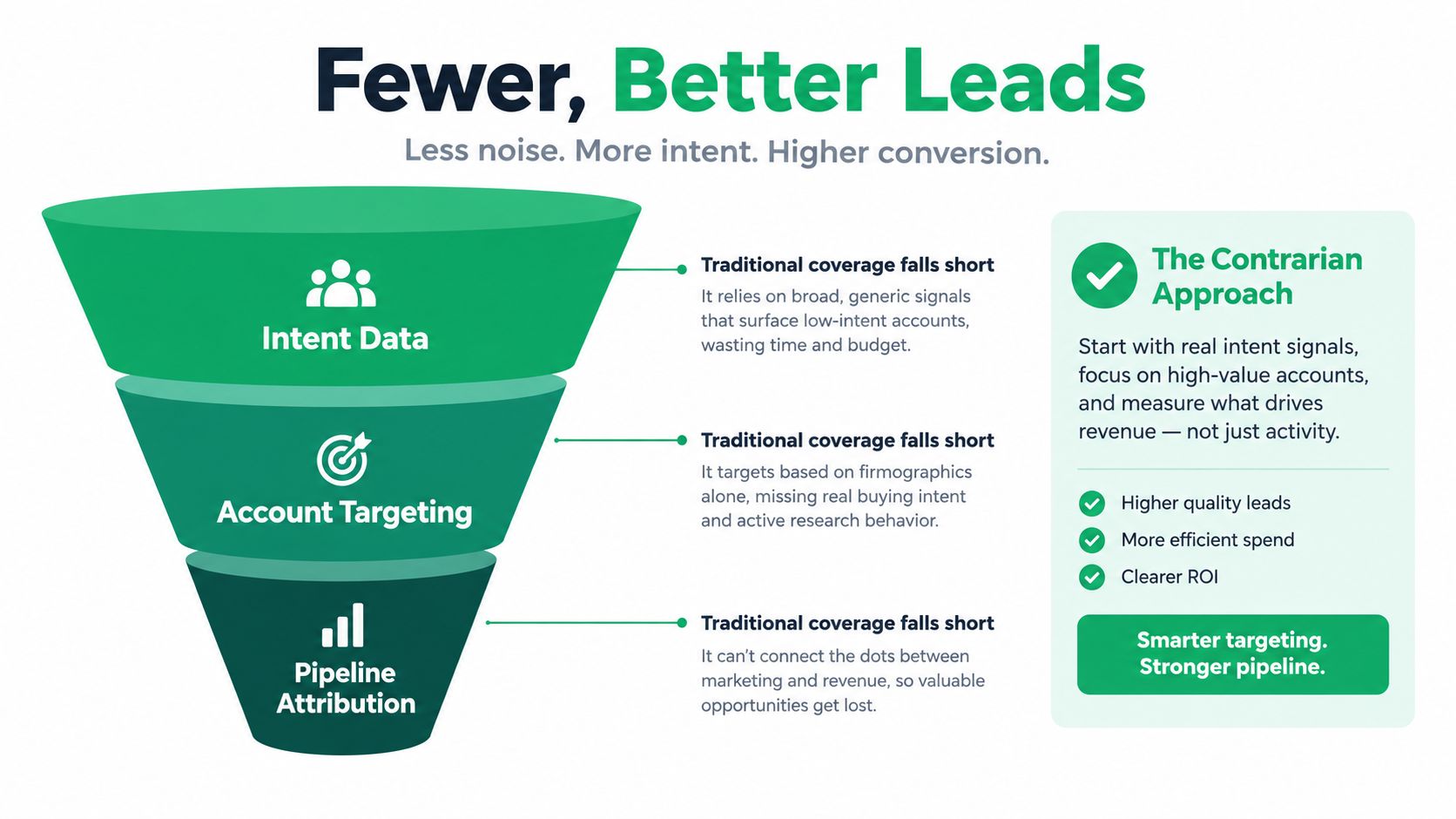
Readiness Scoring Should Preserve Hard Disqualifiers
A practical readiness model should capture verified investable capital, income, liquidity, geography, operating experience, time-to-launch, motivation, and profile fit. These inputs shouldn't collapse into an opaque score that sales can't inspect.
Financial capacity and territory eligibility should operate as gates where the brand requires them. Strong motivation mustn't compensate for an unresolved financial requirement, and a prestigious executive role mustn't erase a mismatch with owner-operator expectations.
The model should also distinguish unknown, self-reported, and verified information. A blank field shouldn't receive a favorable assumption.
| Readiness dimension | Evidence to retain | Outcome used for validation |
|---|---|---|
| Financial capacity | Verification status and reviewed requirements | Application progression |
| Geography and territory | Available market match | Territory approval |
| Operating suitability | Experience and intended involvement | Development-team acceptance |
| Timing and motivation | Documented launch plan and rationale | Attendance and continued engagement |
| Overall profile fit | Explained score and exceptions | Signed agreements |
Stability Claims Need Evidence, Not Enthusiasm
The FDD distinctions established earlier should constrain the agency's growth narrative. Item 20 outlet history and Item 21 audited statements provide different evidence, and neither should be converted into an unsupported assurance of future performance.
This matters across health and beauty, retail, education, and other categories where attractive brand positioning can distract from operating requirements. The agency should be able to identify the documentary basis for every stability or growth statement it uses.
Fewer introductions can represent better execution when the agency removes unsuitable candidates before sales spends time on them.
The framework for how to filter authority and intent in franchise sales supports a more disciplined handoff. Authority and intent should complement financial readiness, not replace it.
The final test is net-new qualified demand and marginal franchise sales after duplicates, no-shows, existing relationships, sales capacity, and attribution bias are addressed. Booked meetings remain a useful activity measure, but they aren't the unit of value.
Integrating Agency Output With Franchise Development Goals
An agency should plug into the franchisor's development motion rather than create a separate operating environment. The development executive retains ownership of candidate standards, market priorities, claims approval, and sales capacity.
FTC guidance identifies Item 20 as the source of outlet-growth and franchisee-turnover information; reviewing the preceding three years allows analysis of additions, closures, transfers, reacquisitions, and net change (FTC's franchise disclosure guide). That review should inform the development narrative before outreach begins.

Connect Qualification to CRM Ownership
Implementation should start with approved profile fields, FDD references, territory exclusions, and documented claim permissions. Each candidate record should then move into the franchisor's CRM with qualification evidence, the assigned sales owner, and the agreed next step.
Discovery-calendar access should follow qualification approval rather than precede it. Sales directors should also retain the ability to pause introductions when their teams can't provide appropriate follow-up.
The franchise sales pipeline automation guide offers a supporting operational reference. Automation should preserve evidence and ownership, not accelerate incomplete records into sales queues.
Calibrate Monthly and Define Exit Conditions
A monthly calibration meeting should compare predicted readiness bands with observed attendance, opportunity creation, and agreements. The participants should inspect rejected records and lost opportunities, then change scoring rules only when the evidence supports the adjustment.
The outsourced-versus-in-house decision should use actual proposals and a fully burdened internal staffing model. Finance should compare recruiting, management, data, systems, content, verification, and coverage requirements rather than treating an agency retainer as equivalent to an employee salary.
| Continuation decision | Evidence leadership should require |
|---|---|
| Continue the current scope | Accepted candidates progressing within agreed economics |
| Revise targeting or execution | Concentrated rejection reasons with a credible corrective plan |
| Expand capacity | Sales coverage and mature cohort evidence supporting expansion |
| End the engagement | Unresolved verification failures, reporting gaps, or breached obligations |
Termination provisions should preserve candidate histories, approved content, attribution records, and suppression data. A replacement partner shouldn't force the franchisor to reconstruct the operating record.
Regardless of provider, permitted financial claims must remain defensible against Item 19, and growth claims must reconcile with Item 20. Procurement discipline ends only when the agency's reporting, the CRM, and the underlying documents tell the same story.
Franchise Fast Track offers franchise development services and an emerging industry intelligence platform for established franchisors evaluating verified-candidate outbound programs. Development leaders can visit Franchise Fast Track, review the embedded program overview, and examine the FDD database and multi-unit franchisee directory when assessing an FDD-aware acquisition strategy.
Ready to see results like these for your franchise?
Stop wasting money on leads that never close. Start getting hundreds of replies from high-net-worth professionals daily.