What Is Master Franchise Ownership? Investor's Guide
Master franchise ownership is a franchising model where one investor receives exclusive rights to sub-franchise and manage a defined territory, acting as a regional franchisor under the primary brand. This structure sits at the top of a three-tier franchise system where the original franchisor, the master franchisee, and individual sub-franchisees each play distinct roles. The master franchisee recruits, trains, and supports local operators while collecting a share of their fees and royalties. For investors with significant capital and leadership experience, this model offers regional control and multiple revenue streams that a single-unit franchise simply cannot match.
What is master franchise ownership and how does it work?
Master franchise ownership places you in the role of a regional franchisor. You hold a contract granting exclusive rights to sell franchises within a defined geography, and you take on the operational responsibilities the parent brand would otherwise handle directly.
The three-tier franchising structure works like this: the original franchisor sits at the top, setting brand standards and collecting a portion of revenue. The master franchisee operates in the middle, managing the territory and sub-franchisees. Sub-franchisees run individual units under the master's supervision. That middle layer is where the real complexity and the real opportunity live.

Revenue flows from three main sources. First, you collect initial franchise fees when you sign up each sub-franchisee. Second, you receive a share of ongoing royalties those sub-franchisees pay. Royalty splits between the franchisor and master franchisee typically fall in the 40%–60% range. Third, some master franchisees operate corporate-owned pilot units that generate direct revenue.
Your responsibilities go well beyond collecting checks. Master franchisees act as local franchisors, managing brand reputation and operational support without constant oversight from the parent company. That means recruiting qualified sub-franchisees, delivering training programs, auditing compliance, and enforcing brand standards across every unit in your territory.
Most master franchise agreements also include mandatory development schedules. A typical clause might require you to open 10 units over five years. Missing those milestones can trigger contract termination.
- Recruit and vet sub-franchisees within your territory
- Deliver initial and ongoing training programs
- Enforce brand standards through regular audits
- Collect and distribute fees and royalties
- Meet contractual unit-opening timelines
- Manage local marketing and compliance programs
Pro Tip: Read your development schedule before signing anything. Missing a milestone is not just a financial setback. It can void your entire territorial agreement.
How does master franchise compare to other franchise models?
The master franchise model is one of three primary structures investors encounter. Understanding the differences protects you from choosing a model that does not match your capital position or operational goals.
Area development agreements require you to open units yourself. You sign a commitment to build a set number of locations directly, hiring staff and running operations at each one. You do not sell franchises to other people. The capital burden is high, but so is your operational control.
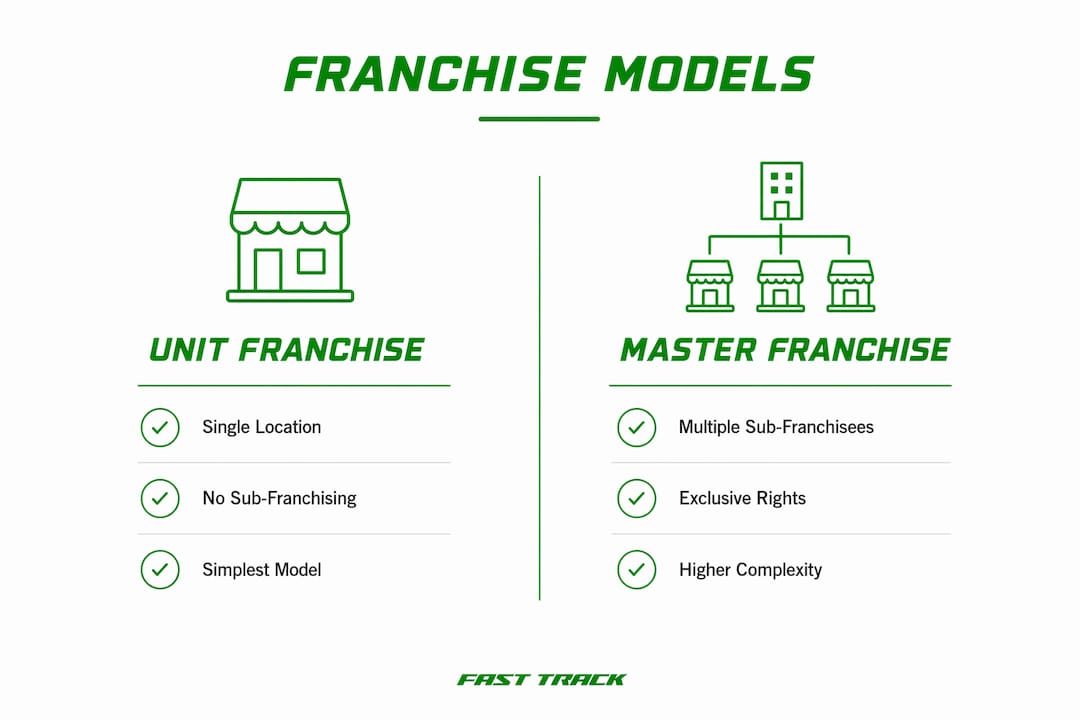
A unit franchise is the simplest model. You buy the right to operate one location under a brand. You pay fees and royalties to the franchisor, follow their system, and run your business. There is no sub-franchising, no regional management, and no revenue from other operators.
Master franchising sits above both. You sell franchises to others, support their operations, and earn from their success. That changes both the capital requirements and the skill set you need.
| Model | Who opens units | Sub-franchising allowed | Revenue sources | Complexity |
|---|---|---|---|---|
| Unit franchise | Franchisee | No | Unit profits | Low |
| Area development | Franchisee | No | Multiple unit profits | Medium |
| Master franchise | Sub-franchisees | Yes | Fees, royalties, pilot units | High |
The distinction between master franchise and area development is the single most misunderstood concept among first-time franchise investors. Getting it wrong means either undercapitalizing a direct-operations model or entering a sub-franchising role without the management infrastructure to support it.
What are the financial and legal considerations?
The financial entry point for master franchise ownership is substantial. Initial territory fees range from $100,000 to $500,000 for most agreements, with major international territories exceeding $1,000,000. That figure covers the license itself, not the full cost of entering the market.
Beyond the territory fee, setup costs include preparing localized franchise agreements, hiring regional staff, building training programs, and in many cases opening corporate flagship stores. These costs cover licensing, training, compliance programs, and regional market establishment. Budget for all of them before you approach a franchisor.
The legal framework carries real teeth. Non-compliance by sub-franchisees can trigger termination of the master franchise agreement. You are legally responsible for what your sub-franchisees do, even when you did not cause the problem. That liability requires rigorous audit systems and clear enforcement protocols from day one.
Key contractual clauses to review before signing:
- Territorial exclusivity: Confirm the boundaries are clearly defined and protected
- Development schedule: Know exactly how many units you must open and by when
- Renewal terms: Understand what conditions trigger or block renewal
- Transfer and resale rights: Check whether the franchisor holds first refusal on any sale
- Compliance enforcement obligations: Know your liability for sub-franchisee violations
Exit strategy is where many investors get surprised. Selling a master franchise region is complex because franchisors typically retain strict approval rights or first refusal on any transfer. You cannot simply sell your territory like a piece of real estate.
Pro Tip: Negotiate exit clauses before you sign the master franchise agreement, not after. A franchisor who resists clear exit terms is telling you something important about the relationship ahead.
How to become a master franchisee: key steps
Becoming a master franchisee is a multi-step process that rewards preparation. Investors who skip steps early tend to discover expensive problems after signing.
-
Conduct market research. Evaluate the territory's population density, competitive environment, and demand for the brand's product or service. A territory that looks large on a map may have limited viable locations.
-
Secure sufficient capital. Account for the territory fee, setup costs, working capital for the first 12–18 months, and reserves for development schedule obligations. Undercapitalization is the most common reason master franchise agreements fail.
-
Review the Franchise Disclosure Document (FDD). The FDD contains audited financials, litigation history, franchisee turnover data, and the full terms of the agreement. Legal due diligence on the FDD is not optional. Hire a franchise attorney before you read it alone.
-
Negotiate the master franchise agreement. Push for clear development schedules, defined territorial boundaries, fair royalty splits, and explicit exit terms. Every clause is negotiable before signing. None are after.
-
Build your operational infrastructure. Hire regional staff, create training materials, and establish your compliance audit process. You need this infrastructure before your first sub-franchisee opens, not after.
-
Consider operating a pilot unit first. Many agreements require pilot unit operation before sub-franchising rights activate. Even when not required, running a unit yourself builds credibility with sub-franchisees and reveals operational gaps.
For a broader view of the full qualification process, the franchise ownership guide at Franchise Fast Track covers the foundational steps in detail.
Key Takeaways
Master franchise ownership is the highest-complexity franchise model, requiring substantial capital, legal preparation, and operational infrastructure to succeed.
| Point | Details |
|---|---|
| Three-tier structure | The model places you between the franchisor and sub-franchisees, with revenue from fees and royalties. |
| Financial entry range | Territory fees run from $100,000 to over $1,000,000, plus significant setup and operating costs. |
| Legal liability is real | You are responsible for sub-franchisee compliance; violations can terminate your entire agreement. |
| Exit is not simple | Franchisors typically hold approval rights on transfers, making resale complex and slow. |
| Preparation determines success | Market research, legal due diligence, and operational readiness must come before signing. |
Why most investors underestimate what this role actually demands
I have watched investors approach master franchise ownership the way they approach buying a rental property. They focus on the income potential and skim the obligations. That gap in thinking is where most failures begin.
The role is not passive. You are running a regional business that also happens to sell and support other businesses. That requires two skill sets operating simultaneously: the discipline of a compliance officer and the instincts of a sales leader. Most people are strong in one and weak in the other.
The legal liability piece gets underestimated most consistently. When a sub-franchisee cuts corners on food safety, customer service, or brand standards, the franchisor looks at you. Your name is on the agreement. Your territory is at risk. Rigorous audits and a willingness to terminate underperforming sub-franchisees are not optional management tools. They are survival requirements.
Technology has also changed the model's appeal. U.S.-based franchisors increasingly favor multi-unit development over master franchising because direct support is now easier to deliver remotely. That means the master franchise opportunities available today tend to be in markets where the franchisor genuinely needs a local operator, not just a fee collector. That is actually a better situation for a serious investor. You have real leverage in negotiations, and the franchisor has real skin in your success.
My honest advice: treat the master franchise agreement like a business acquisition, not a franchise purchase. Get a franchise attorney, model your development schedule against realistic capital reserves, and negotiate exit terms before you fall in love with the brand.
— Cody
How Franchise Fast Track supports master franchise investors
Investors evaluating master franchise opportunities need more than general information. They need access to qualified franchise systems and the tools to evaluate them clearly.

Franchise Fast Track connects high-income investors, including executives and senior professionals earning $150K–$500K annually, with franchise opportunities matched to their capital and goals. The platform's franchise development resources cover the full spectrum of ownership models, including master franchise structures. For investors who want to understand key terms before entering negotiations, the franchise glossary defines every concept from royalty splits to FDD requirements. Franchise Fast Track reports a 34% lead-to-close rate, which reflects the quality of matches made between serious investors and franchise systems worth owning.
FAQ
What is the master franchise definition in simple terms?
A master franchise is a license granting one investor exclusive rights to sell and support franchises within a defined territory, acting as a regional franchisor under the parent brand.
How much does a master franchise agreement cost?
Initial territory fees range from $100,000 to over $1,000,000 depending on territory size and brand maturity, with additional costs for setup, training, and compliance programs.
What is the difference between a master franchise and a unit franchise?
A unit franchise grants rights to operate one location. A master franchise grants rights to sell franchises to others and manage an entire regional network of sub-franchisees.
What are the main advantages of master franchise ownership?
The primary advantages include exclusive territorial rights, multiple revenue streams from sub-franchisee fees and royalties, and the ability to build a regional business portfolio under an established brand.
How do I become a master franchisee?
The process requires market research, capital verification, legal review of the Franchise Disclosure Document, negotiation of the master franchise agreement, and building operational infrastructure before sub-franchising begins.
Recommended
- Types of Franchise Ownership Models: A 2026 Guide | Franchise Fast Track Blog
- How to Become a Franchise Owner: Your Essential Guide | Franchise Fast Track Blog
- Franchise Ownership for Executives: A Strategic Guide | Franchise Fast Track Blog
- Franchise vs Licensing: A Guide for Established Brands | Franchise Fast Track Blog
Ready to see results like these for your franchise?
Stop wasting money on leads that never close. Start getting hundreds of replies from high-net-worth professionals daily.