Business Categories Best Suited for Franchising in 2026
The business categories best suited for franchising — when your target buyer earns $150K–$500K — are B2B business services, tech-enabled home services, senior care, pet wellness, boutique health and wellness and professional education. These six categories share three traits that matter to executive investors: contract or subscription revenue, low-to-moderate asset intensity, and unit economics that hold up under FDD scrutiny.
- Service orientation and recurring revenue reduce the cash-flow volatility that high-income professionals find unacceptable. A B2B contract or a wellness membership pays monthly; a restaurant table does not.
- Capital efficiency compresses break-even timelines and lowers default risk, two metrics professional buyers actually model before signing.
Franchise Fast Track's proprietary system connects franchisors with verified buyers in this income band and reports a lead-to-close rate of 34% — a figure that reflects what happens when the right category meets the right buyer.
Table of Contents
- Why these categories appeal to $150K–$500K professional buyers
- Five factors every franchisor should measure before committing to a category
- Top franchise categories: profiles built for professional buyers
- Investment profiles and financing options for professional buyers
- How to position your franchise offer to attract executives
- Screening and recruiting: who actually qualifies
- Pilot your category before franchising at scale
- Your quarter-ready action plan
- Key Takeaways
- Why the emphasis on service models and professional buyers
- Franchise Fast Track connects you with buyers who are already looking
- Useful sources
Why these categories appeal to $150K–$500K professional buyers
High-income professionals evaluate franchise opportunities the way they evaluate any capital allocation: they want predictable cash flows, a clear exit path, and a business they can manage without abandoning their career. That calculus points directly toward service-oriented models.
Professional investors are shifting away from asset-heavy concepts toward subscription and membership revenue structures in 2026. The reason is straightforward: a recurring-revenue model produces a defensible income statement. An executive who already earns $300K annually is not looking for a second job running a restaurant — he or she wants a business that generates income with a management layer in place.
B2B service franchises add another layer of appeal. Franchise financing experts note that B2B models carry longer contract life and higher average revenue per client than typical B2C retail. A commercial cleaning contract or a managed IT services agreement renews annually; a consumer transaction does not.
Pro Tip: When pitching to professional buyers, lead with contract duration and average revenue per client, not brand recognition. Executives respond to income-statement logic, not consumer familiarity.
Five factors every franchisor should measure before committing to a category
The Franchise Browser analyzed 810+ brands and identified five measurable factors that predict franchisee success. Use this as your pre-development checklist.
- Unit economics — Pull FDD Item 19 if disclosed. If not, calculate annual closure rates from Item 20. About 66% of brands do not disclose revenue, so Item 20 is often your only audited data point.
- Franchisor support infrastructure — Request support SLA descriptions, training timelines, and the ratio of field support staff to franchisees.
- Territory protection — Confirm exclusivity terms in writing. Overlapping territories destroy unit economics faster than almost any other variable.
- Category tailwinds at a 7-year horizon — Franchise agreements often span a decade. A strong brand cannot offset a declining category. Evaluate demographic and spending trends through at least 2032.
- Owner-operator skill alignment — Match the category's operational demands to the buyer's background. A former CFO is a natural fit for a B2B services franchise; a retired nurse may prefer senior care.
Pro Tip: Ask every prospective franchisor for an Item 20 summary showing unit openings, closures, and transfers for the past three years. Any reluctance to provide it is itself a data point.
Top franchise categories: profiles built for professional buyers
Here is what the numbers actually show for each recommended category.
| Category | Best for | Typical initial investment | Asset intensity | Revenue model | Break-even | Owner-operator vs. absentee |
|---|---|---|---|---|---|---|
| B2B business services | Former executives, managers | $75,000–$200,000 | Low | Contract/recurring | 12–18 months | Both |
| Tech-enabled home services | Operations-minded professionals | $80,000–$304,000 | Low–Medium | Project + recurring | 12–18 months | Owner-operator |
| Senior care (non-medical) | Healthcare-adjacent professionals | $100,000–$379,000 | Low | Contract/hourly | 12–18 months | Owner-operator |
| Pet wellness and mobile pet services | Animal-interested investors | $50,000–$150,000 | Low | Subscription/service | 12–18 months | Both |
| Boutique health and wellness | Fitness/wellness-oriented buyers | $150,000–$400,000 | Medium | Membership | 12–18 months | Absentee-capable |
| Professional education and tutoring | Education-background buyers | $80,000–$200,000 | Low | Subscription/session | 12–18 months | Both |
B2B business services attract executives because the client relationship mirrors what they already know. Home services average $1.53M revenue on a $304K investment — a roughly 5x revenue-to-investment ratio that outperforms full-service restaurants by a wide margin. B2B services carry comparable efficiency with the added benefit of institutional clients and multi-year contracts. Risk: sales cycle length and dependence on a principal's professional network early on.
Tech-enabled home services combine recurring maintenance contracts with mobile delivery, keeping overhead low. The scalable franchise models in this category suit professionals who want operational leverage without a brick-and-mortar lease. Risk: labor availability in tight markets.
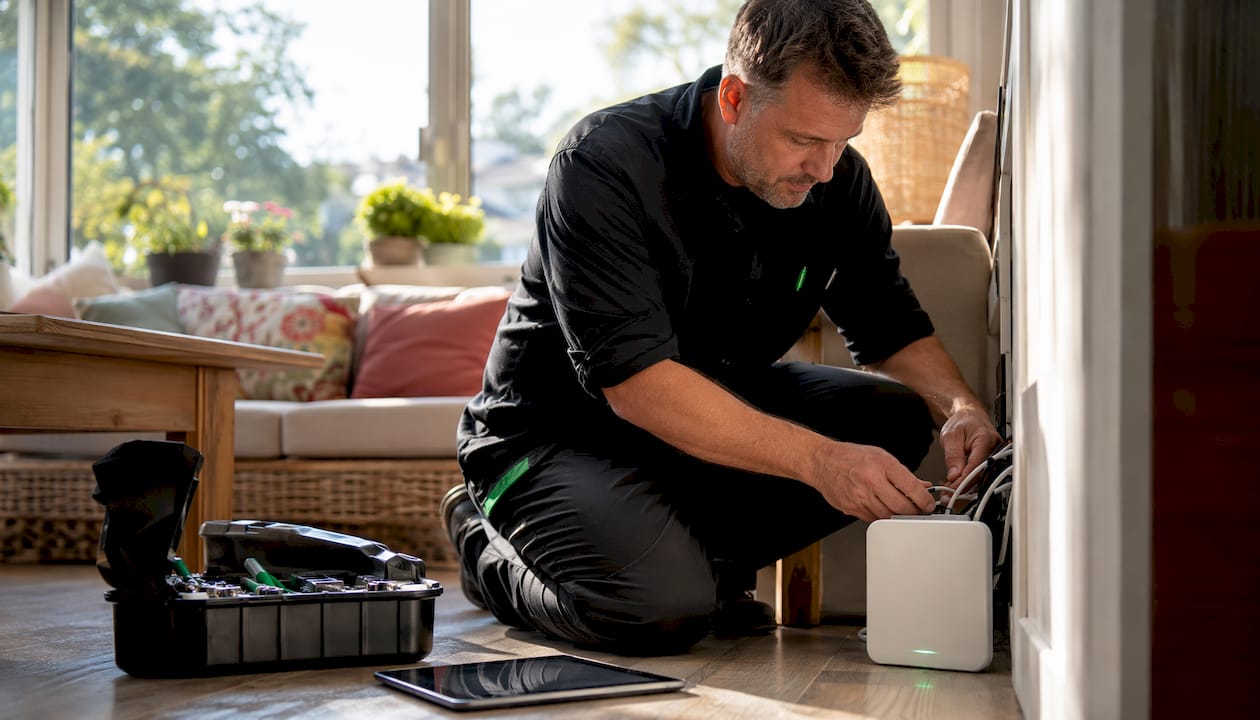
Senior care posts growth near 33.2% and averages $1.58M revenue on a $379K investment. Demographic tailwinds through 2032 are as reliable as any in franchising. Risk: caregiver recruitment and state-level regulatory variation.
Pet wellness and mobile pet services grew approximately 31.6% and carry some of the lowest entry costs on this list. Subscription grooming and wellness plans convert one-time customers into monthly revenue. Risk: market saturation in dense urban areas.
Boutique health and wellness runs on membership revenue, which produces the predictable monthly income professional buyers want. Risk: higher build-out costs and sensitivity to local competition from large gym chains.
Professional education and tutoring suits buyers with an education or coaching background. Session-based and subscription models both work, and the category benefits from recurring revenue structures that compound as student rosters grow. Risk: seasonality and dependence on local school-year cycles.
Investment profiles and financing options for professional buyers
Professional buyers in the $150K–$500K income band typically arrive with investable capital and a preference for leverage. Three financing routes dominate.
- SBA 7(a) loans cover most service-category investments and carry government-backed terms that reduce lender risk. Healthcare franchises show a default rate of just 3.8%, while full-service restaurants hit 17.9% — a gap that directly affects SBA approval odds and interest terms.
- Portfolio or securities-backed financing appeals to executives who hold significant investment accounts and prefer not to liquidate positions.
- Seller notes or phased investment structures lower the initial cash requirement and signal franchisor confidence in unit performance.
Capital-efficient categories (B2B services, mobile pet services, tutoring) typically break even in 12–18 months. Asset-heavy concepts push that to 18–36 months and carry meaningfully higher default risk. When packaging an opportunity for a professional buyer, lead with the break-even timeline and the financing structure, not the brand story.
How to position your franchise offer to attract executives
The core positioning claim for professional buyers is simple: predictable cash flow plus professional-grade operations plus capital efficiency. Every piece of recruitment collateral should reinforce all three.
Effective channels include executive LinkedIn campaigns, high-net-worth newsletters, wealth advisor and CPA referral networks, and industry-specific professional associations. These buyers are not browsing franchise portals — they are being reached through trusted professional networks.
Prepare three core assets before outreach: an AUV case study drawn from Item 19 or audited unit P&Ls, an Item 20 summary showing closure and transfer rates, and a one-page territory analysis. A short pitch that works in LinkedIn outreach: "This B2B services franchise generates $X average annual revenue on a $Y investment, with Z-year client contracts and a 12-month average break-even. Absentee-capable after month six." Numbers first, brand second.
Pro Tip: Frame the opportunity around exit planning. Professionals think in 5–10 year horizons. Show them the resale multiple for franchises in the category alongside the income stream.
For targeted outreach at scale, franchise email marketing built specifically for funded buyers shortens the time from first contact to qualified conversation.
Screening and recruiting: who actually qualifies
A fast vetting workflow protects your sales team's time. Set hard thresholds before the first call.
- Minimum investable liquid capital: $75,000–$150,000 depending on category, verified before a discovery day invitation.
- Income verification: W-2 or 1099 documentation confirming the $150K–$500K range.
- Role clarity: Active operator or absentee investor? The answer determines which categories to present.
- Investment horizon: Professionals with a 5–10 year horizon are your best buyers; those seeking a 12-month flip are not.
Screening questions that surface fit quickly: What is your current management experience? Are you seeking a primary business or supplemental income? Have you reviewed an FDD before? What is your target monthly draw in year two?
Red flags: inability to verify liquid capital, unwillingness to review Item 20, and overreliance on brand recognition as the primary investment thesis. A buyer who cannot articulate the unit economics after a discovery day is not ready.
Pilot your category before franchising at scale
Run a single-market prototype for 6–12 months and collect investor-grade data before selling franchises to professional buyers. The sequence: launch one unit, operate it under real market conditions, then document everything.
KPIs to capture by category:
| KPI | Home services target | Senior care target | B2B services target |
|---|---|---|---|
| AUV (annual unit volume) | $400K–$1.5M | $500K–$1.5M | $300K–$1M |
| Gross margin | 40–55% | 35–50% | 50–65% |
| Time to positive cash flow | 12–18 months | 12–18 months | 6–12 months |
Pilot documentation must include an audited P&L, a repeatable customer acquisition cost figure, and a standardized territory analysis. Professional buyers will ask for all three. Building your franchise team before the pilot ends, not after, keeps the transition to franchise sales on schedule.
Your quarter-ready action plan
Three moves to execute before the end of this quarter:
- Run an Item 20 and KPI audit on your pilot unit. Calculate closure rates, AUV, and gross margin. If the numbers hold, you have a sellable story.
- Build a professional-targeted pitch package — one-page territory analysis, AUV case study, financing options summary (SBA 7(a) terms, portfolio financing, seller note structure).
- Launch a small LinkedIn or executive-outreach test targeting directors, VPs, and senior managers in your category's adjacent industries. Aim for three qualified conversations in 30 days.
Measure early success by lead-to-qualified rate, not raw lead volume. Franchise Fast Track's system reports a 34% lead-to-close rate precisely because the front-end qualification is built into the process.
Pro Tip: Set a 90-day checkpoint. If your outreach produces fewer than three qualified conversations per month, the problem is usually the channel or the pitch, not the category.
Key Takeaways
Service-oriented, contract-revenue franchise categories consistently outperform asset-heavy models when the target buyer earns $150K–$500K and evaluates opportunities on unit economics, break-even timelines, and financing efficiency.
| Point | Details |
|---|---|
| Top six categories | B2B services, tech-enabled home services, senior care, pet wellness, boutique wellness, and professional education lead for high-income buyers. |
| Capital efficiency matters | Home services average a 5x revenue-to-investment ratio; mobile and home-based concepts break even in 12–18 months vs. 18–36 for asset-heavy builds. |
| Five evaluation factors | Unit economics, franchisor support, territory protection, 7-year category tailwinds, and owner-operator skill alignment predict franchisee success. |
| Item 20 is non-negotiable | About 66% of brands withhold revenue data; Item 20 closure rates are the only audited benchmark available to professional buyers. |
| Franchise Fast Track | Connects franchisors with verified $150K–$500K buyers and delivers a reported 34% lead-to-close rate through its proprietary outreach system. |
Why the emphasis on service models and professional buyers
The conventional franchise playbook still centers on food and retail — categories that dominate trade shows but consistently underperform on the metrics professional investors actually use. Full-service restaurants carry a 17.9% default rate and break-even timelines that stretch past two years. That is a hard sell to someone who already earns a strong income and is allocating capital, not career time.
The shift toward service-oriented and subscription models is not a trend. It is a structural realignment driven by demographic tailwinds in senior care, the professionalization of pet ownership, and the growing preference among executives for businesses that run on contracts rather than foot traffic. The franchisors who recognize this early — and build their recruitment materials around income-statement logic rather than brand storytelling — will close faster and retain franchisees longer.
Franchise Fast Track's 34% lead-to-close figure is worth examining closely. That number reflects what happens when category selection, buyer qualification, and outreach channel all align. Most franchise development teams are not underperforming because their category is wrong. They are underperforming because they are pitching the right category to the wrong buyer.
Franchise Fast Track connects you with buyers who are already looking
Franchisors in the categories above face one consistent bottleneck: finding buyers who can actually close. Franchise Fast Track solves that specific problem. The platform delivers hundreds of monthly appointments with verified professionals earning $150K–$500K — executives, directors, and senior managers who are actively evaluating franchise ownership, not casually browsing.
The lead-to-close rate of 34% is the result of front-end qualification built into every outreach sequence. You spend time on discovery days and closing conversations, not on disqualifying unverified leads.
- What a demo delivers: qualified buyer introductions, a screening workflow calibrated to your category, and a campaign playbook aligned to executive channels.
- Next step: Visit Franchise Fast Track's franchise development page to see how the system works and request a pilot match with verified buyers in your target category.
Useful sources
- Franchise Industry Trends 2026: What the Data Shows | FranchiseVerdict — Item 20 disclosure rates, revenue-to-investment ratios, and SBA default rates by category.
- Top 5 Emerging Franchise Categories in 2026 | FranchiseIQ — Growth rates for senior care, pet services, and healthcare; 2026 category tailwind analysis.
- What Actually Makes a Franchise Successful? 5 Data-Backed Factors From 810+ Brands | The Franchise Browser — The five measurable success factors and break-even timeline data.
- Before You Buy a Franchise: Sectors That Actually Win | Franchise Lending Group — B2B service model appeal to professional investors; pilot documentation standards.
- Top 100 Franchises | IFPG — Current franchise rankings across home services, senior care, and business services categories.
- Top 200 Franchises for 2026 | Franchise Business Review — Category-level performance data and investment ranges across franchise sectors.
This article is general information for franchisors evaluating category and recruitment strategy. Consult a qualified franchise attorney and review current FDD disclosures before making development or investment decisions.
Recommended
- Proven Franchise Growth Strategies for 2026 | Franchise Fast Track Blog
- The 7 Fastest Growing Franchises of 2026: An Analysis | Franchise Fast Track Blog
- Business Consulting Franchises: 2026 Guide for Franchisors | Franchise Fast Track Blog
- Loans for Franchise: Faster Funding Strategies for 2026 | Franchise Fast Track Blog
Ready to see results like these for your franchise?
Stop wasting money on leads that never close. Start getting hundreds of replies from high-net-worth professionals daily.